




–
Homeowners insurance can provide valuable protection when something goes wrong, but it does not cover every type of damage that can happen to your home. Some losses are specifically excluded from a standard homeowners policy. Others may require an endorsement or even a completely separate policy. Unfortunately, many homeowners do not find out about these limitations until they have a claim. Here are several common insurance surprises homeowners should understand before damage occurs.
Not Every Loss Is Covered
Insurance is generally designed to protect against losses that are sudden and accidental. Damage that happens gradually over weeks, months or years may not be covered.
There are also certain risks that standard homeowners policies specifically exclude. In some cases, additional coverage can be purchased. In others, insurance may simply not be available for that particular type of loss.
It is also important to remember that your insurance agent does not make the final decision about whether a claim is covered. The insurance carrier’s claims department reviews the circumstances and determines how the policy applies.
Termites, Insects and Vermin
Termite damage can become extremely expensive, particularly when insects damage flooring, floor joists or other structural components.
Unfortunately, standard homeowners policies commonly exclude losses caused by insects, rodents, birds and vermin. Because termite damage typically develops gradually rather than happening as a sudden accident, it generally falls outside normal homeowners coverage.
For this risk, prevention is especially important. Regular pest inspections, treatment and a termite bond can help protect your home against a problem that insurance may not pay to repair.
Power Surges May Require Additional Coverage
A lightning strike and a manmade electrical surge are not necessarily treated the same way by an insurance policy.
Artificially generated electrical currents can damage televisions, appliances, computers, HVAC systems, garage-door openers, well pumps and other electronics throughout a home.
Coverage for this type of loss may require an equipment breakdown endorsement.
Because one electrical event can damage several expensive systems at the same time, this is an additional coverage homeowners may want to consider when reviewing their policy.
Slow Leaks and Hidden Water Damage
Water damage is another area where homeowners can easily be caught by surprise.
If a pipe suddenly bursts and causes damage, that may be considered a sudden and accidental loss. A small leak that continues for several months is different.
Homeowners policies may exclude damage caused by constant or repeated seepage or leakage of water, along with moisture, condensation or humidity that develops over time.
For example, a supply line under a sink might slowly drip for months before anyone notices it. By then, the cabinet, flooring or subfloor could be badly damaged. Even though the homeowner did not know the leak was there, the gradual nature of the damage can affect whether the loss is covered.
Mold Coverage Can Be Limited
Mold is closely connected to the issue of water damage.
Mold, fungus and wet rot are commonly excluded or limited under homeowners policies. However, there can be circumstances where some coverage applies if mold results from a sudden, covered water loss.
Some insurance companies may also provide limited mold coverage or offer additional protection.
The cause of the mold matters. Mold that develops after a sudden plumbing failure may be treated very differently from mold that has accumulated over many years because of ongoing moisture or poor ventilation.
Flood and Earthquake Coverage
Flooding is not covered by a standard homeowners insurance policy.
Homeowners who want protection against flooding generally need to purchase a separate flood insurance policy, including coverage available through the National Flood Insurance Program.
Earthquake damage can also require separate coverage or an endorsement. Depending on the insurance carrier, earthquake coverage may be available as an optional addition to the homeowners policy.
These are good examples of risks that homeowners may assume are included simply because they have homeowners insurance when separate protection may actually be required.
Matching Roofing, Siding and Flooring
Suppose part of your roof is damaged during a covered loss, but the exact shingles are no longer available.
The insurance company may pay to replace the damaged portion of the roof without necessarily replacing the undamaged portion simply because the new shingles do not match.
The same issue can occur with siding and flooring.
Some insurance carriers offer matching coverage endorsements that can provide additional protection when damaged materials cannot reasonably be matched to the rest of the home. This is another optional coverage worth asking about when reviewing your policy.
Fallen Trees May Not Be Covered
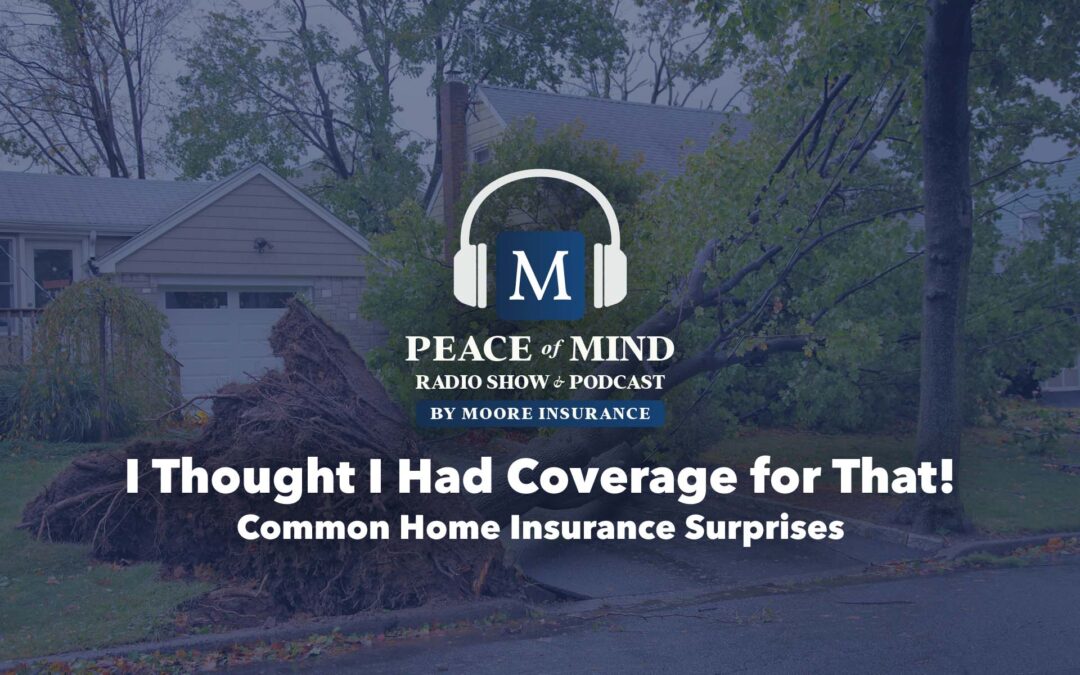
If a storm knocks down a tree in your yard, homeowners insurance does not necessarily pay simply because the tree fell.
Coverage can depend on whether the tree damaged a covered structure.
For example, if the tree falls onto your house, garage, shed or fence, there may be a covered claim. If the tree simply falls in the middle of the yard without damaging anything, the policy may not provide coverage.
For homeowners with heavily wooded properties, understanding this distinction can prevent a frustrating surprise after a storm.
Damage to Your Land
Homeowners insurance is primarily designed to insure your home and other covered property, not the land itself.
If a creek rises and washes away part of a creek bank, or erosion damages part of your property, homeowners insurance may not pay to restore the land.
This can be especially important for properties with creeks, steep terrain or other natural features where erosion or water movement could become an issue.
Older Roofs May Have Different Coverage
The age of your roof can also affect how a claim is paid.
Some older roofs may no longer qualify for full replacement-cost coverage and may instead be insured on an actual cash value basis.
That means depreciation can be taken into account when a claim is settled, potentially leaving the homeowner responsible for a larger portion of the cost of replacing the roof.
Know What Your Policy Covers Before You Have a Claim
The worst time to discover a gap in your insurance coverage is after something has already happened.
Homeowners policies can contain exclusions, limits and optional coverages that are easy to overlook until there is a loss. Taking the time to review your policy beforehand can help you understand what is covered, what is not, and whether additional endorsements or separate policies make sense for your situation.
At Moore Insurance Services, we can help you review your current coverage, explain the options available to you and identify areas you may want to address before a claim occurs.
If it has been a while since you have reviewed your homeowners insurance, call Moore Insurance Services today. We’ll help you better understand your coverage and make sure you know what protection you have before you ever need to use it.
Contact Moore Insurance Services today to review your policy or request a quote.